

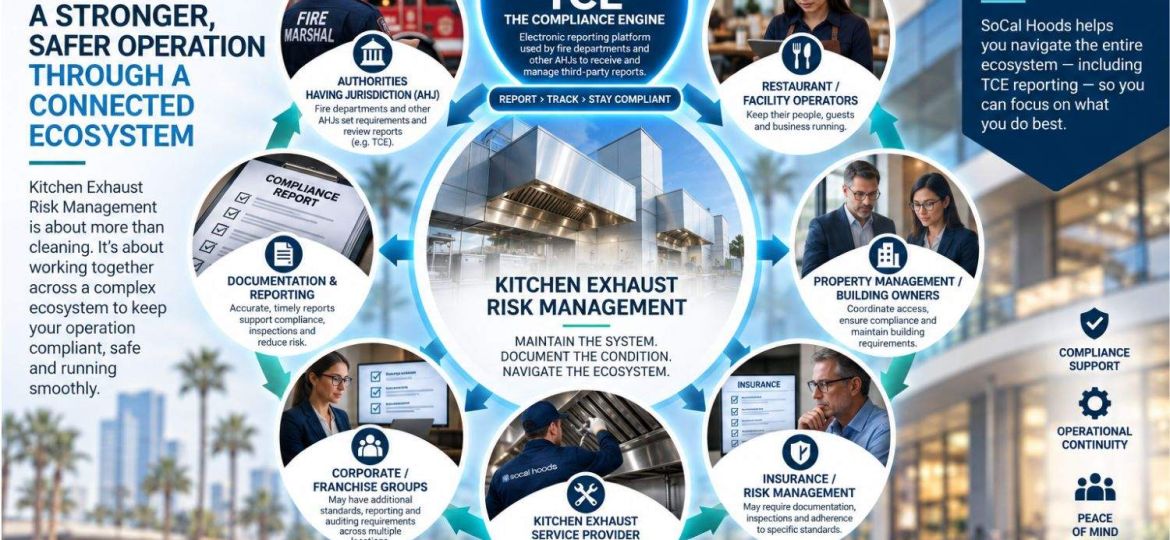
The Compliance Engine (TCE) is an electronic reporting platform used by participating fire departments and other Authorities Having Jurisdiction (AHJs) to track inspection and maintenance records for life safety systems, including commercial kitchen exhaust cleaning. Working with a service provider familiar with TCE, like SoCal Hoods, can reduce administrative issues and keep service records accurate for commercial kitchens in jurisdictions that require it.
Serving Southern California since 2010, SoCal Hoods helps restaurant owners, facility managers, and multi-location operators maintain clean kitchen exhaust systems while providing the documentation needed to support compliance efforts.
In this blog, we’ll explain how The Compliance Engine works, why it matters for compliance, and what to look for in a hood cleaning provider to help streamline your record-keeping and support your ongoing maintenance program.
How TCE Supports Commercial Kitchen Risk Management
TCE is a useful tool for tracking fire safety compliance. However, a report uploaded to a compliance platform does not make a grease-laden exhaust system compliant.
Proper inspection, cleaning, and maintenance of these systems are critical components of commercial kitchen fire prevention. Accurate, up-to-date service records are just as important when it’s time for a fire inspection or compliance review.
When records are complete and easy to access, it’s simpler to demonstrate compliance, track maintenance history, and prepare for inspections.
The Compliance Engine Does Not Replace NFPA 96 Maintenance
The Compliance Engine is a reporting and compliance-management platform, while NFPA 96 sets inspection requirements. NFPA 96 is the National Fire Protection Association standard that establishes fire safety requirements for commercial cooking operations, including ventilation systems, grease removal, inspection, and cleaning. Local fire authorities may also establish specific reporting requirements for facilities within their jurisdiction.
The actual condition of the kitchen exhaust system remains critical. Commercial kitchen exhaust systems must be inspected at appropriate intervals, and when cleaning is required, the system must be serviced according to applicable standards and requirements. This includes accessible portions of the kitchen exhaust system such as the hood, plenum, ductwork, exhaust
fan, and other applicable components.
A capable vendor understands documentation requirements, provides records that support your workflow, and understands the importance of NFPA 96 compliance.
Kitchen Exhaust Risk Management Extends Beyond the Hood
Kitchen Exhaust Risk Management considers the full ecosystem surrounding a commercial exhaust system. Routine hood cleaning is a vital life-safety process. Cooking grease coats ductwork over time, effectively turning exhaust systems into highly flammable fuses. Coordinating inspections, reporting, access, and NFPA 96 compliance transforms basic maintenance into an essential risk-management strategy, protecting operations against catastrophic fire, business interruption, and severe financial liability.
According to the NFPA, U.S. fire departments respond to reports of more than 9,000 restaurant fires annually, causing $175 million in direct property damage. Failure to clean is a leading contributor to these fires, making grease buildup the leading preventable hazard in commercial kitchens.
Because regular cleaning is vital to managing this risk, your hood cleaning provider should provide clear documentation after each service, including the service date, cleaning verification, technician information, and the recommended service frequency based on system conditions and applicable requirements.
How SoCal Hoods Helps Commercial Kitchens Stay Inspection Ready
Since 2010, SoCal Hoods has provided commercial kitchen exhaust inspection, cleaning, maintenance, and compliance support throughout Southern California.
Our technicians are trained and certified in commercial kitchen exhaust system service, and we maintain a dedicated quality-control process to provide consistent service and documentation.
Our program includes:
- Commercial kitchen exhaust inspection and maintenance
- NFPA 96-focused kitchen exhaust service
- Hood, plenum, ductwork, and exhaust fan cleaning as applicable
- Before-and-after service documentation
- Service inspection reporting
- Identification and documentation of system deficiencies
- Recommended service frequencies based on system conditions and applicable requirements
- Compliance reporting support where required
- Quality-control oversight
- $5 million in insurance coverage
- Service capabilities for single-location and multi-location commercial customers
For jurisdictions utilizing The Compliance Engine, our team understands the importance of ensuring applicable documentation is properly handled as part of the overall service and compliance process.
Keep Your Kitchen Exhaust Records Organized With SoCal Hoods
The Compliance Engine provides participating Authorities Having Jurisdiction with an important tool for receiving and managing third-party fire and life-safety compliance information. For commercial kitchens in jurisdictions using The Compliance Engine, working with an experienced kitchen exhaust service provider can help ensure the exhaust system’s physical condition and the documentation supporting its maintenance are handled properly.
If your organization needs a commercial kitchen exhaust cleaning partner that understands NFPA 96 maintenance requirements and the importance of documentation and jurisdictional reporting, SoCal Hoods is here to help.
Contact our team today to schedule service and learn how our reliable hood cleaning and detailed documentation can support your compliance program.